Currency

Are you over 18 years old?
Please confirm you are 18+ years old, and that using offered products is legal in your country.
Please confirm you are 18+ years old, and that using offered products is legal in your country.
 585-842-7333
 249-438-7333
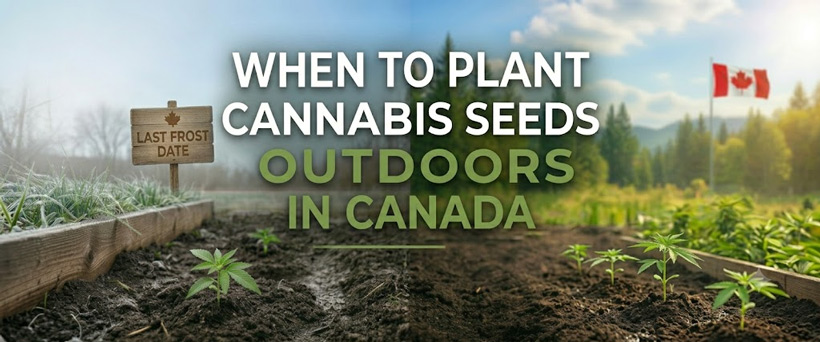
If you’re planning to grow outdoor cannabis seeds in Canada, getting the timing right is critical. Plant too early, and a single night of frost could kill your seedlings. But if you wait too long, you could face cooling temperatures and shorter days before your plants reach peak flowering capacity.
When to start cannabis seeds outdoors in Canada depends partly on your region of the country, with BC having the most favourable conditions, and the Prairie provinces posing the greatest challenges. This guide looks at the four major growing regions in Canada, walking you through last-frost dates, transplant windows, and what to do in the weeks leading up to outdoor planting.
Cannabis plants are sensitive to both temperature and light. Warmth enables them to germinate and establish healthy roots, and the duration of light and dark periods triggers the blooming cycle. With Canada’s shorter summers, outdoor cultivation periods aren't as long, so you have less time for your plants to grow and flower.
Determining when to start cannabis seeds outdoors in Canada depends largely on the late-frost date for cannabis in your region. A frost event can shock or kill young plants, so planting outside too early can ruin your entire crop. At the same time, waiting too long can mean your plants are still growing into early fall, leaving them at risk for a wet September, when mould can develop in dense buds before they are ready to harvest. Choosing the timing and genetics suitable for your region is critical.
The last frost date for cannabis cultivation is the earliest time that you can move your plants outdoors. As a general rule, cannabis seedlings shouldn't go outside until nighttime temperatures are consistently above 10°C and the risk of frost has passed. For most of Canada, that’s somewhere between mid-May and early June, but it varies widely by region and changes slightly every year.
Canada’s plant hardiness zones offer a general guide to climate conditions, including daytime temperature, precipitation, and frost duration. The Canadian government maintains an interactive tool where you can search for your plant hardiness zone by municipality.
While plant hardiness zones can be used as a general guide for when to start cannabis seeds outdoors in Canada, they are not an exact proxy for last-frost dates. Hardiness zones are based on the average minimum temperature in winter, whereas last frost dates are the last day that temperatures dip below 0°C. Whereas some regions, like lower Vancouver Island, have both a mild winter and an early last frost date, others, such as the Edmonton area, have extremely cold winters and relatively moderate spring temperatures.
Outdoor cannabis planting in Ontario depends on your region within the province. In southern Ontario, the last frost typically falls between late April and mid-May. Most growers in this region transplant outdoor weed seeds between mid-May and early June. The long, warm summers there give plants plenty of time to develop before harvest in late September or October.
Areas north of this, such as the Ottawa Valley and the Bruce Peninsula, stay colder longer, and growers may have to wait until mid-June before moving plants outdoors. Further north still, outdoor planting may not give plants enough time to fully develop, but with the right indoor setup, successful cannabis cultivation is entirely achievable.
Quebec and the Maritimes run a bit cooler than Ontario and are more unpredictable. Last frost in Montreal and Quebec City typically occurs in mid-May, while growers in New Brunswick, Nova Scotia, and PEI should plan to move seedlings outside in late May. In these regions, fast-finishing (under 10 weeks) outdoor weed seeds are the best choice. Mould-resistant strains are also recommended for Maritime growers.
British Columbia is arguably the best climate for growing outdoor cannabis seeds in Canada. The Lower Mainland and Vancouver Island benefit from mild, temperate conditions, with the last frost usually arriving in mid-April in coastal areas. Growers there can often transplant by early May.
Inland BC and the Okanagan area are typically warmer and drier through summer. In these areas, look for heat-tolerant strains with rapid flowering cycles so you’re not caught off guard by late-season moisture and autumn frosts.
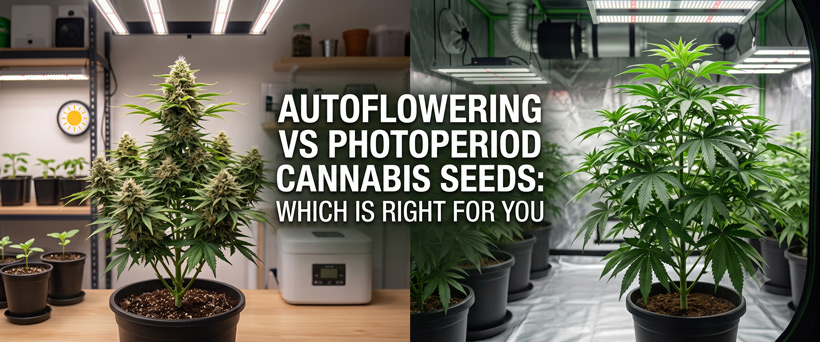
Edmonton, Calgary, and Winnipeg all have last frost dates for cannabis transplantation in mid-to-late May, with early frosts possible by late September. With this short outdoor cultivation period, growers are wise to choose autoflowering seeds, which bloom based on age rather than daylight hours. These strains complete their entire cycle in as few as 70 to 75 days.
If you’re wavering on when to start cannabis seeds outdoors in your region of Canada, germinate them indoors in April, then transplant the seedlings outdoors once conditions are stable. This gives your outdoor weed seeds a four-to-six-week head start under controlled conditions, so they're already well-established when you take them outside.
Gradually exposing your young plants to outdoor conditions is the best practice. This is called “hardening off.” Start with a few hours outside in a sheltered spot, keeping them in their pots, then increase their outdoor time each day. Watch out for heavy winds and storms, and monitor their moisture levels carefully, as small pots can dry out quickly when left outside. Transplant them into the ground after hardening off, and when you’re sure there’s no more risk of frost.
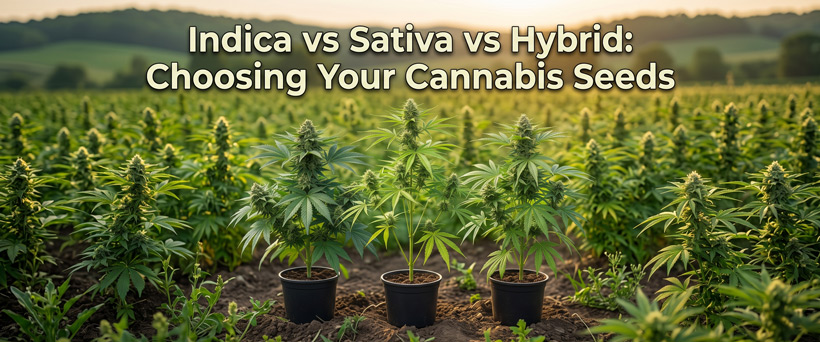
Genetics matter. Not every cannabis strain is right for Canadian climates. Long-flowering sativas, for example, can take 14 weeks or more to finish, making them a risky choice for most regions.
For outdoor cannabis in Canada, prioritize:
If you're in a region with a longer season, like southern Ontario or the BC coast, you have more flexibility to explore full-season photoperiod strains with higher yield potential.
Browse all of the outdoor cannabis seeds at True North Seed Bank to find genetics that match both your region and your growing goals, along with your preferences for flavour, scent, and THC/CBD concentration. The extensive filter options on our cannabis seeds page will help you home in on the best choices for you.
It depends on your region, but as a general rule, wait until nighttime temperatures are consistently above 10°C and the risk of frost has passed. For most of Canada, that means somewhere between mid-May and early June.
Yes, but you’ll have a shorter growing season than some other regions. Choose autoflowering strains for the best results. These strains flower based on age rather than light cycles and can complete their full cycle in as few as 70 to 75 days.
British Columbia (particularly the Lower Mainland, Vancouver Island, and the Okanagan Valley) offers the most favourable outdoor growing conditions in Canada. Mild springs, long summers, and relatively dry weather make it well-suited to a wide variety of strains.
Yes. Starting seeds indoors in April and transplanting after the last frost gives seedlings a good head start. Be sure to harden them off gradually over one to two weeks before leaving them outside permanently.